
Medical Marketing
Chiropractic AI Receptionist vs. Traditional Receptionists: A Deep Dive Into Efficiency Metrics
February 5, 2026 · Zack Siegel · 8 min read
Front‑desk work in chiropractic care is changing. AI front‑desk receptionists offer a practical alternative to traditional staff — often lowering costs and smoothing daily operations. In this piece we compare AI and human receptionists across expenses, clinic efficiency, patient experience, and rollout best practices. Read on to get clear, actionable insight so your practice can decide which approach fits your goals, staff, and patients.
What Are the Cost Differences Between AI and Human Receptionists in Chiropractic Practices?
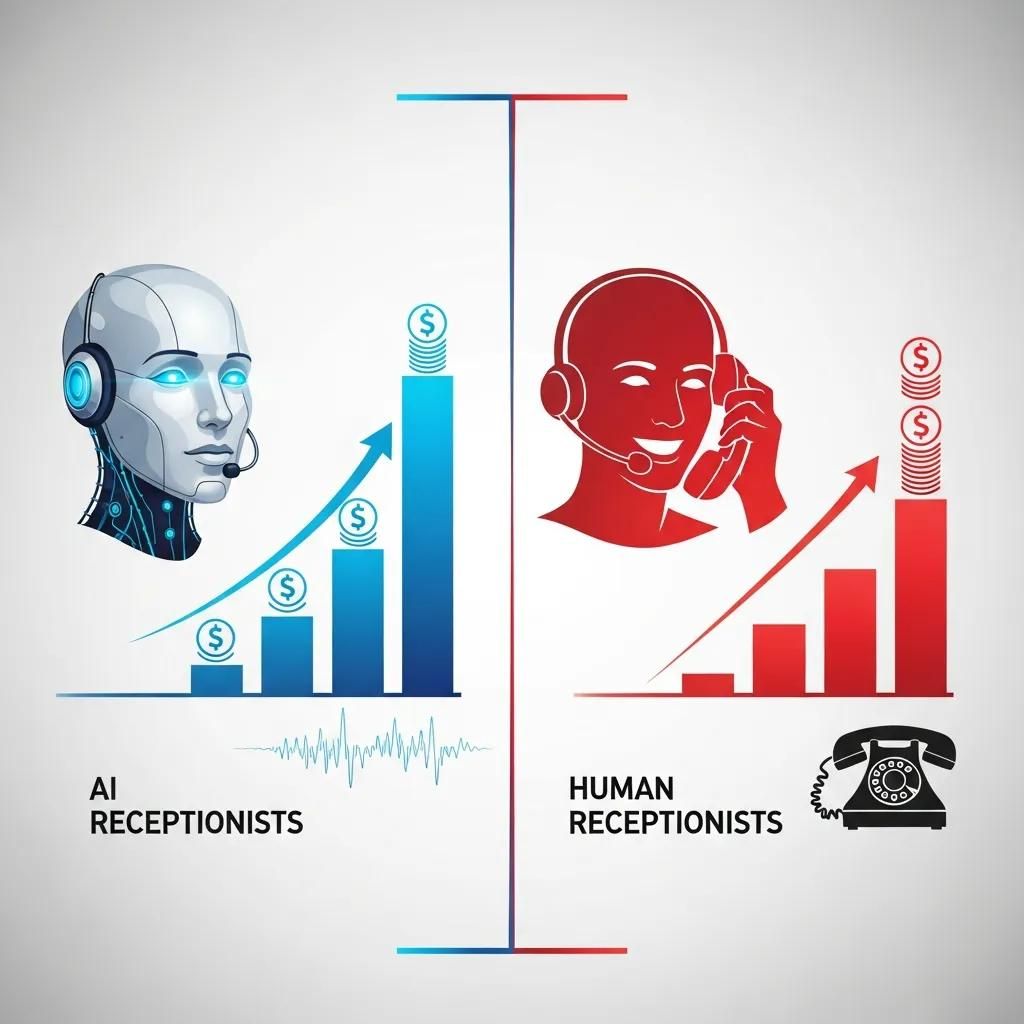
Cost is often the first consideration when clinics evaluate AI receptionists. Knowing the direct and indirect costs helps you compare options and plan your budget.
How does an AI subscription stack up against a human receptionist’s salary and benefits?
AI receptionist services are usually offered as monthly subscriptions, which can be much cheaper than employing a full‑time person. Typical AI plans fall between $200 and $500 per month, depending on features. By contrast, a human receptionist in the U.S. chiropractic field typically earns roughly $2,800 to $3,200 per month — before benefits, payroll taxes, and training. That gap highlights where clinics can realize meaningful savings.
What hidden costs come with traditional receptionists?
The base salary is just one piece of the total cost for a human receptionist. Other expenses to budget for include:
- Training Costs: Time and resources to onboard new hires and keep skills current.
- Turnover and Hiring Costs: Recruiting, interviewing, and repeated onboarding when staff leave.
- Benefits and Insurance: Health coverage, retirement contributions, payroll taxes and other employer obligations.
When you add these elements up, the effective monthly cost of a human receptionist can be substantially higher than the headline salary.
How Do AI Receptionists Improve Operational Efficiency in Chiropractic Clinics?
AI receptionists streamline repetitive front‑desk work so your team can focus on patient care. That leads to smoother workflows, fewer errors, and measurable time savings.
In what ways does 24/7 availability reduce missed calls and help acquire patients?
One clear advantage of AI is always‑on coverage. When your front desk never "closes," fewer calls go unanswered and more prospective patients can book appointments. Depending on the clinic and provider, round‑the‑clock availability has driven reported increases in patient acquisition in the 20–30% range for some practices. Consistent availability also improves first impressions — a key factor in converting inquiries into visits. Learn More About Patient Acquisition.
How does AI automation streamline scheduling and lead qualification?
AI handles routine scheduling, confirms availability, and qualifies leads automatically. That removes repetitive tasks from your staff’s plate and reduces double‑booking or missed follow‑ups. The result: faster appointment handling, fewer administrative bottlenecks, and more time for clinicians and front‑desk staff to manage higher‑value interactions.
These operational gains are part of a broader trend where AI improves healthcare workflows and patient service.
AI in Healthcare: Boosting Efficiency and Patient Care
AI tools — from machine learning to natural language processing — are being embedded in healthcare systems to make data easier to use, speed up diagnostics, and support personalized care. In practice, these applications can simplify workflows, support clinical decisions, and reduce human error. Examples include predictive analytics for smarter staffing, automated scheduling to cut wait times, and supply‑chain improvements that help clinics run more efficiently.
The role of AI in enhancing hospital operational efficiency and patient care, V Suryawanshi, 2025
What Is the Impact of AI Receptionists on Patient Experience and Satisfaction?
How patients perceive your front desk matters. AI receptionists can lift response speed and consistency, but clinics must balance automation with humanity to keep satisfaction high.
Can AI provide personalized communication while preserving the human touch?
Modern AI systems use patient data and preferences to tailor messages and interactions, which can feel personalized and efficient. To address concerns about losing empathy, smart implementations route complex or sensitive issues to human staff. That hybrid approach keeps routine work automated while preserving human judgment for moments that need it.
Research into intelligent receptionist solutions supports the potential of AI to improve service when implemented thoughtfully.
AI Reception System: Improving Service and Outcomes
Automated receptionist systems have been developed to reduce face‑to‑face congestion and streamline routine inquiries — a need that became especially clear during the pandemic. Designs that combine authentication with speech and interaction recognition can handle common questions and basic tasks in local languages, improving throughput and service outcomes in busy environments.
AI reception: an intelligent Bengali receptionist system integrating with face, speech, and interaction recognition, RA Nabid, 2021
How does faster response time boost patient engagement in chiropractic care?
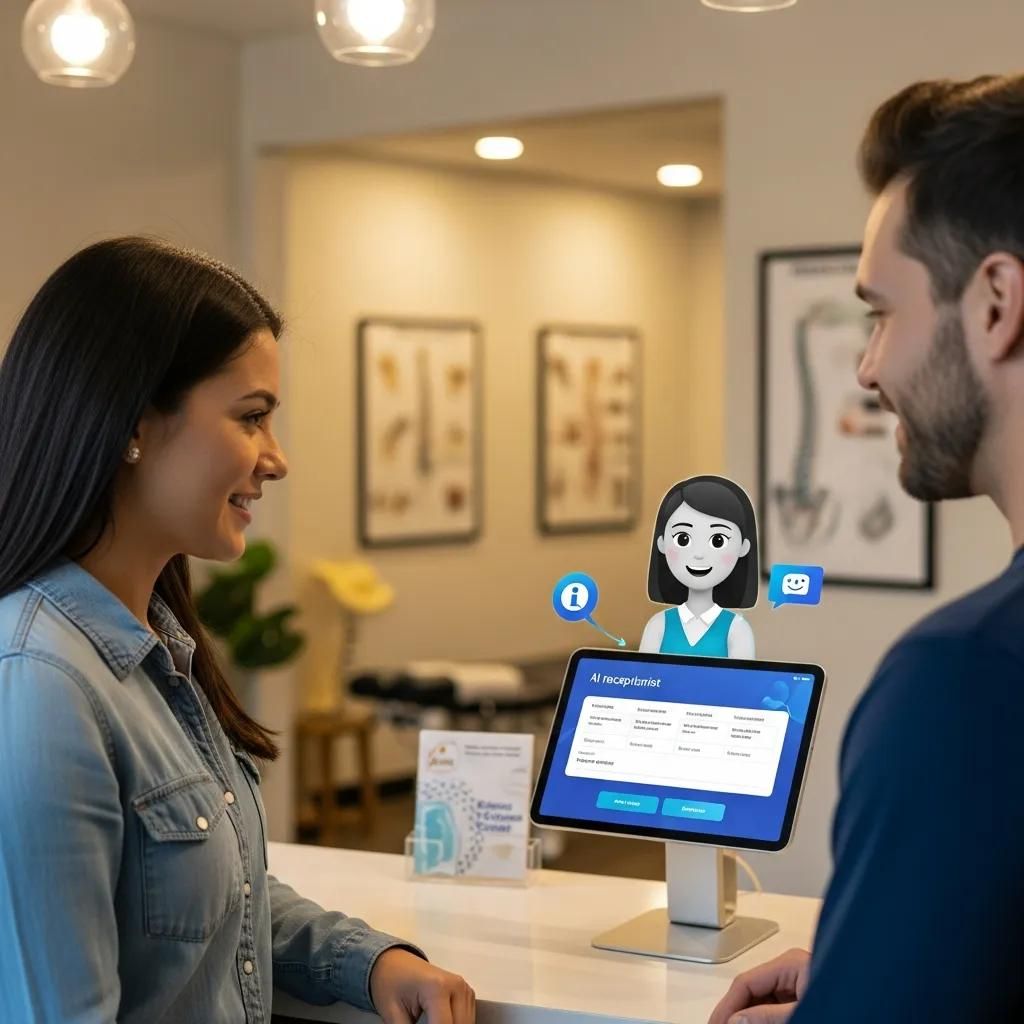
Quick answers and timely reminders keep patients connected to your clinic. AI systems can resolve common questions instantly, confirm appointments, and send reminders — actions that reduce no‑shows and encourage patients to follow care plans. When responses are prompt, patients feel heard and are more likely to stay engaged.
How Does Integration with EMR/EHR Systems Enhance AI Receptionist Functionality?
Connecting AI receptionists with your EMR/EHR unlocks better accuracy and smoother scheduling — and reduces manual entry work that creates errors and wastes staff time.
What are the benefits of seamless AI integration for practice management?
When an AI receptionist reads and writes to your EMR/EHR, it can pull appointment availability, update patient records, and verify basic information automatically. That reduces data friction, cuts double entry, and speeds up check‑in and follow‑up tasks — all of which translate into more reliable daily operations.
How does integration support compliance and reduce errors?
Automating routine data tasks lowers the chance of transcription errors and helps maintain consistent records — an important step toward regulatory compliance. With proper encryption, access controls, and audit trails, AI solutions can support HIPAA compliance and strengthen how patient data is protected and managed.
What Are Best Practices for Implementing AI Receptionists in Chiropractic Clinics?
Rolling out AI at the front desk succeeds when clinics plan intentionally, train staff, and keep escalation paths clear.
How can hybrid models combine AI efficiency with human empathy?
Hybrid models use AI for repeatable tasks while reserving complex conversations for people. This setup preserves the personal touch patients value and uses automation where it delivers the most benefit. The result is a faster, more consistent front‑desk experience without sacrificing empathy.
What steps ensure a smooth setup and staff training for AI receptionists?
Follow these practical steps to deploy AI smoothly:
- Assess Needs: Map your busiest workflows and decide which tasks to automate first.
- Choose the Right Technology: Pick an AI receptionist that integrates with your existing systems and supports your patient population.
- Train Staff: Give the team hands‑on training and a clear escalation plan so everyone knows when to intervene.
These actions help staff adopt the new tools and keep patient care consistent during the transition.
Why Choose Think Bullish’s AI Front Desk Receptionist for Chiropractic Practices?
If you’re evaluating AI options, Think Bullish builds solutions specifically for healthcare teams that want reliable automation without losing clinical focus.
What unique features and guarantees does Think Bullish offer?
Our AI Front Desk Receptionist includes customizable patient dialogs, EMR/EHR integration, and true 24/7 availability — all backed by service uptime and support guarantees. We configure interactions to match your clinic’s voice, route complex cases to staff, and provide monitoring so the system improves over time.
How does Think Bullish’s solution compare to competitors on cost and efficiency?
Think Bullish’s pricing is competitive with typical AI subscriptions while delivering measurable efficiency gains. Clinics using our system report reduced wait times and improved patient satisfaction, which often offsets the investment quickly compared with the ongoing costs of a traditional receptionist.
| Cost Comparison | AI Receptionist | Traditional Receptionist |
|---|---|---|
| Monthly Cost | $200 – $500 | $2,800 – $3,200+ |
| Training Costs | Minimal | High |
| Availability | 24/7 | Limited |
AI receptionists offer a clear path to lower overhead, faster service, and more consistent patient communication. Use the comparative data above to decide what matches your operational priorities and patient care standards. For clinics ready to modernize, Think Bullish provides tailored support and implementation guidance. See How We Support Medical Practices.
Frequently Asked Questions
What are the potential challenges of implementing AI receptionists in chiropractic clinics?
Common challenges include change resistance from staff, a learning curve during rollout, and initial technical setup. Address these by involving your team early, running pilot tests, and setting clear escalation rules so sensitive issues always reach a human quickly.
How can clinics measure the success of AI receptionists?
Track measurable KPIs: patient satisfaction scores, appointment booking conversion, missed‑call reduction, and administrative hours saved. Combine analytics with staff and patient feedback to continually refine the system.
Are there specific types of chiropractic practices that benefit more from AI receptionists?
High‑volume clinics, multi‑location practices, and clinics with heavy scheduling needs typically see the biggest gains. Practices focused on growth or looking to free clinician time for patient care also benefit from automation.
What role does data security play in the use of AI receptionists?
Data security is essential. Choose solutions that offer HIPAA‑aligned safeguards: encryption, role‑based access, secure storage, and audit logging. Regular security reviews and vendor transparency are musts to protect patient data and maintain trust.
How do AI receptionists handle patient inquiries that require human intervention?
Well‑designed systems escalate: they either transfer calls to live staff, flag messages for follow‑up, or display prompts so patients can request a human directly. This hybrid routing keeps simple tasks automated while ensuring complex needs get personal attention.
What future developments can we expect in AI receptionist technology?
Expect more natural conversational interfaces, better personalization through learning patient preferences, and deeper integration with telehealth and practice management tools. These advances will make AI receptionists more intuitive and more useful for clinicians and patients alike.
Conclusion
Adding an AI receptionist can cut costs, speed up front‑desk work, and improve patient communication when implemented with care. By weighing the trade‑offs between automation and human service, clinics can choose a model that supports their care goals and team. If you’re curious how Think Bullish’s AI solutions work in real clinics, we’re ready to walk you through a demo and implementation plan.
About the author
Zack Siegel
Founder & CEO of Think Bullish. Since 2017 he's helped 441+ medical practices grow with done-for-you advertising, an A.I. front desk, and full-funnel patient-acquisition systems.
More from Zack Siegel →