
Medical Marketing
Unlock More Patients With Chiropractic AI Receptionist
February 5, 2026 · Zack Siegel · 10 min read
Healthcare is shifting — and clinics that adopt the right tools capture more bookings and build stronger patient relationships. An AI receptionist takes care of routine patient contact so your team can focus on care. Below we outline how AI tightens scheduling, increases new‑patient acquisition, and simplifies daily operations. You’ll also see how
Think Bullish’s AI front‑desk
keeps workflows running smoothly while supporting HIPAA-aligned controls.
Evidence consistently shows that a
strong online presence
combined with dependable admin support shapes patient decisions and satisfaction.
Chiropractic Patient Engagement: Internet & Admin Staff Impact
Online channels help patients discover clinics, form first impressions, and manage bookings. Administrative teams play a key role in shaping positive experiences outside the exam room.
Health care encounters in Danish chiropractic practice from a consumer perspectives—a mixed methods investigation, C Myburgh, 2016
What Is an AI Receptionist for Chiropractors?
An AI receptionist is a digital front desk that handles everyday administrative tasks for chiropractic clinics. It answers routine questions, books and confirms appointments, and automates follow‑ups so your staff spends less time on paperwork and more time with patients. Properly configured, AI keeps communication timely and consistent — improving patient experience while preserving your team’s personal touch.
That change reflects how the receptionist role is evolving as clinics add digital tools to their front desk.
Digital Transformation: Evolving Receptionist Roles in Healthcare
Background: Practice receptionists are often seen as the gateway to primary care, managing demand and guiding patients. As online, patient-facing services grow, this role is becoming more complex and digitally focused. Aim: to examine how online services affect the general practice receptionist’s responsibilities.
Evolution of the general practice receptionist role and online services: qualitative study, H Atherton, 2025
How Does AI Scheduling Improve Chiropractic Patient Intake?
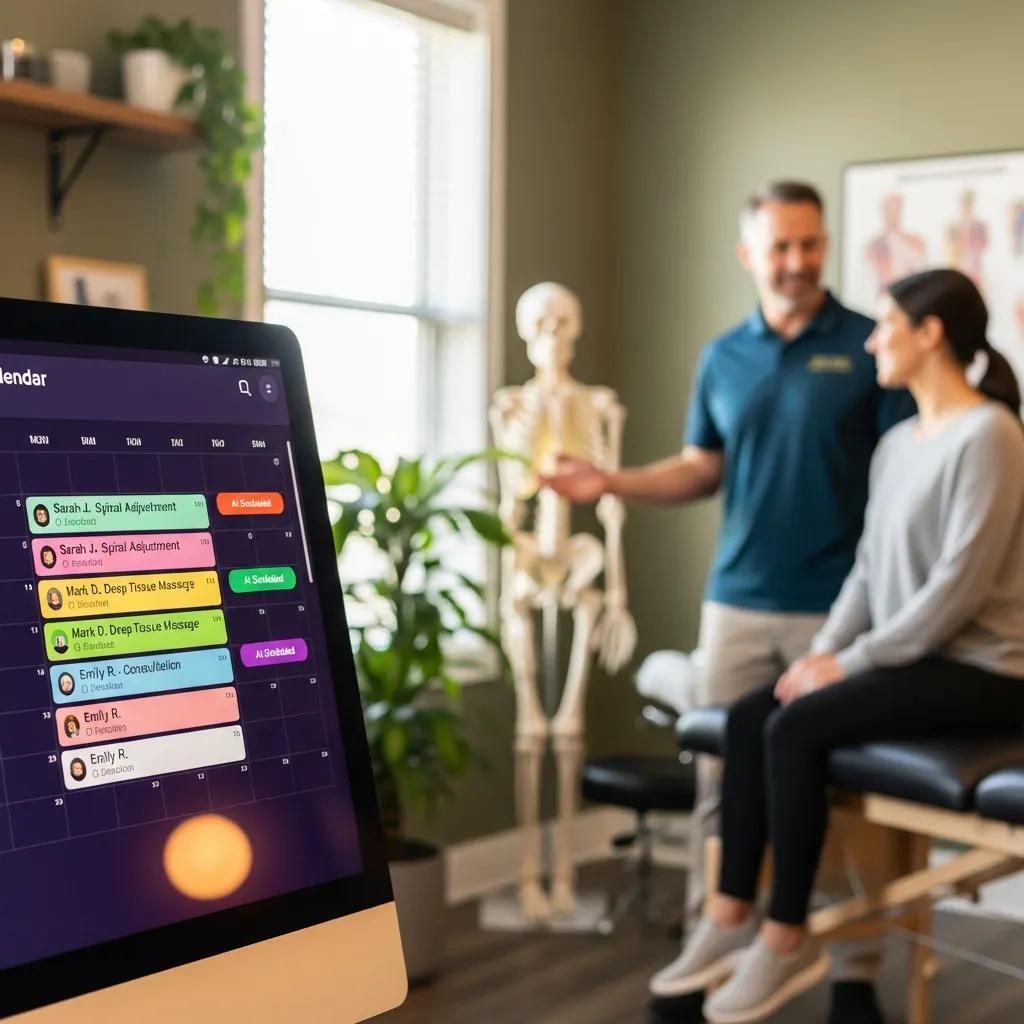
AI-powered scheduling streamlines intake by automating bookings, confirmations, and reminders. That leads to fewer no‑shows and faster booking responses, leaving more available slots and steadier daily volume. Smart scheduling also aligns patient preferences with provider availability so your calendar fills more predictably and patients get appointment times that work for them.
Recent studies support AI’s role in optimizing both staff rostering and patient appointment management.
AI-Powered Scheduling for Healthcare Efficiency & Patient Management
The healthcare sector has long faced challenges around efficient resource allocation and scheduling, leading to underused staff time and longer waits. This paper analyzes AI scheduling systems designed to optimize staff rostering and patient appointments simultaneously, improving utilization and patient flow.
Assessing the Efficiency of AI-Powered Scheduling Systems for Staff Rostering and Patient Appointment Management in Healthcare Settings, 2023
What Roles Does a Virtual Receptionist Chiropractic Fulfill?
- Handling Patient Inquiries : Quickly answers common questions about services, treatments, insurance, and office hours to turn interest into bookings.
- Appointment Scheduling : Manages your calendar, books visits, and sends confirmations — cutting down back‑and‑forth and human error.
- Follow‑Up Communications : Sends post‑visit check‑ins and feedback requests to support outcomes and improve retention.
Together, these capabilities reduce administrative friction and smooth the patient journey from first contact through follow‑up.
The broader benefits of virtual care — clearer communication and more efficient scheduling — are discussed in current literature.
Virtual Healthcare: Streamlined Communication & Efficient Scheduling
Objectives: This narrative review examines the benefits and limits of virtual healthcare, including access to specialists, streamlined communication, efficient scheduling, EHR integration, remote monitoring, and resource optimization across distances.
The transformative power of virtual hospitals for revolutionising healthcare delivery, A Vallée, 2024
How Can an AI Receptionist Increase Patient Acquisition for Chiropractors?
AI receptionists capture leads around the clock. With 24/7 availability, your clinic can answer questions and book appointments after hours — so fewer prospects slip through the cracks. AI can also pre‑qualify inquiries by collecting key details, helping your team prioritize the highest‑value leads first.
Why Is 24/7 Patient Engagement Critical for Chiropractic Practices?
People expect quick answers. Always‑on engagement gives prospective patients instant information and booking options when it’s convenient for them, which raises conversion rates. Practices that offer reliable, round‑the‑clock contact typically see better retention and a steadier flow of new appointments.
How Does AI Reduce Missed Calls and Boost Bookings?
AI reduces missed calls by offering chat, text, and automated phone routing that capture inquiries when staff are busy. Those channels gather contact details and appointment intent so your team can convert leads efficiently. Clinics that add AI communication tools often see booking rates rise because fewer opportunities are lost to voicemail.
What Are the Operational Benefits of Using a Chiropractic AI Assistant?
Adding an AI assistant streamlines front‑desk work and improves
clinic efficiency
. Benefits include lower admin load, smarter use of staff time, and a consistent patient experience from first contact to follow‑up.
How Does AI Reduce Administrative Burden and Staff Workload?
AI handles repetitive tasks — scheduling, reminders, basic triage — so reception teams can focus on higher‑value work and patient care. That reduces burnout, speeds workflows, and lets staff spend more time where human judgment matters most.
What Data-Driven Insights Does AI Provide for Practice Growth?
AI captures engagement metrics, scheduling patterns, and patient feedback that reveal growth opportunities. Use those insights to adjust hours, staffing,
marketing
, and services — turning operational data into practical plans that support steady growth.
| Benefit | Description | Impact Level |
|---|---|---|
| Reduced Administrative Tasks | Automates scheduling and reminders | High |
| Improved Staff Productivity | Frees up time for patient care | High |
| Enhanced Patient Experience | Provides timely communication | Medium |
Those operational gains make practices more efficient and more focused on patients — a clear advantage in a competitive local market.
Successful clinics pair technology with solid business practices. For example, adequate coverage and risk protection matter — learn more about
chiropractic business insurance
to safeguard your operation.
How Does Think Bullish’s AI Front Desk Receptionist Work for Chiropractors?
Think Bullish builds AI front‑desk solutions around chiropractic workflows. Our system connects with your existing tools, and we configure the AI to follow your processes, mirror your tone, and escalate complex cases to staff when needed.
What EHR and PMS Systems Does the AI Receptionist Integrate With?
The AI links with a range of Electronic Health Record (EHR) and Practice Management Systems (PMS) so patient data and appointments stay synchronized. That integration reduces duplicate work and gives staff access to current information when treating patients.
How Is the AI Receptionist Customized for Chiropractic Practices?
Customization lets you set scheduling rules, messaging tone, and follow‑up workflows so the AI acts like an extension of your team. We tailor prompts and scripts to match your brand and clinical protocols, ensuring consistent, on‑brand patient interactions.
Is an AI Receptionist HIPAA Compliant and Secure for Chiropractic Practices?
Security and HIPAA alignment are essential. AI receptionists are built with encryption, access controls, and audit trails to protect patient data and help your practice meet regulatory expectations.
What Measures Ensure HIPAA Compliance in AI Patient Intake?
Core safeguards include encrypted storage and transmission, role‑based access, and logging for audits. Those controls lower risk and help intake workflows meet HIPAA standards.
How Does Think Bullish Protect Patient Information with AI?
Think Bullish uses secure storage, encrypted data transfer, and strict access controls so only authorized users can view sensitive records. Regular security reviews and compliance checks are part of how we protect patients and practices.
How Does an AI Receptionist Complement Human Staff in Chiropractic Clinics?
AI is built to enhance — not replace — your team. It handles routine tasks consistently while humans manage complex conversations, clinical judgment, and relationship building — creating a more efficient, patient‑centered front desk.
Why Do Patients Prefer Human Interaction Alongside AI Assistance?
Patients value fast, automated answers for simple needs but still prefer a human for personal or complex matters. Combining AI with attentive staff gives patients the convenience they expect plus the empathy they want.
What Are the Cost and ROI Benefits Compared to Human Receptionists?
AI can reduce operational costs by lowering the need for additional admin hires and improving appointment throughput. Returns appear as more bookings, fewer no‑shows, and better use of your team’s time — all supporting stronger revenue and margins.
Integrating an AI receptionist gives
chiropractors
a practical path to increase patient acquisition, tighten operations, and improve the patient experience. With the right setup, AI lets you focus on delivering care while the front desk runs reliably.
Frequently Asked Questions
How can an AI receptionist help with patient retention?
An AI receptionist supports retention by keeping communication consistent and timely. It sends automated appointment reminders, follows up after visits, and prompts feedback. Those touchpoints keep patients informed and valued, which reduces drop‑off and encourages repeat visits.
What are the potential challenges of implementing an AI receptionist?
Common challenges include initial setup work, staff training, and change management. Some patients still prefer human contact for complex issues. Ensuring smooth integration with workflows and compliance takes planning. Clear staff communication and ongoing support help overcome these hurdles.
How does an AI receptionist handle complex patient inquiries?
AI receptionists handle routine questions efficiently and recognize when an issue needs a human. They can transfer complex conversations to staff so patients receive the personalized attention they need. This hybrid approach preserves service quality while improving efficiency.
What impact does an AI receptionist have on clinic workflow?
Adding an AI receptionist streamlines workflows by automating scheduling, reminders, and follow‑ups. That reduces administrative burden and lets staff focus on patient care and higher‑value tasks. Clinics often see faster service, shorter waits, and higher patient satisfaction.
Can an AI receptionist adapt to different chiropractic practices?
Yes. AI receptionists are configurable to match a practice’s branding, scheduling rules, and common patient queries. That adaptability ensures the AI acts as a seamless extension of your team while supporting each clinic’s unique operations.
What role does patient feedback play in improving AI receptionist performance?
Patient feedback is essential. By collecting and analyzing interaction feedback, clinics identify where the AI can improve — response accuracy, tone, or flow. Continuous refinement based on real patient input keeps the system effective and trusted.
What types of tasks can an AI receptionist handle in a chiropractic practice?
An AI receptionist answers FAQs, books and confirms appointments, sends reminders, and manages post‑visit follow‑ups. It also collects basic patient details after hours and aggregates feedback — freeing staff for higher‑value work and keeping patients engaged around the clock.
How does an AI receptionist improve patient satisfaction?
By offering quick, consistent responses and timely reminders, AI reduces friction and wait times. Patients get the information they need when they need it, which boosts convenience, trust, and the likelihood of return visits.
Can an AI receptionist integrate with existing practice management software?
Yes. Think Bullish’s AI integrates with many EHR and PMS platforms so patient records and schedules stay synchronized in real time. That keeps workflows smooth and minimizes duplicate data entry.
What are the cost implications of implementing an AI receptionist?
Implementing AI typically lowers ongoing admin costs by reducing manual scheduling and follow‑up work. Over time, increased bookings and fewer no‑shows improve revenue, helping the investment pay off through greater efficiency and growth.
How does an AI receptionist ensure data security and HIPAA compliance?
AI platforms use encryption, role‑based access, and audit logging to protect PHI and support HIPAA requirements. Regular security audits and strict access controls help preserve confidentiality and trust.
What feedback do patients typically provide about AI receptionists?
Patients commonly praise the convenience and speed of AI for routine tasks while still preferring human contact for personal matters. That feedback supports a hybrid model: automate routine work, and keep staff available for relationship‑driven care.
Integrating an AI receptionist into your chiropractic practice improves operational efficiency, increases bookings, and raises patient satisfaction without sacrificing personal care. This practical technology frees your team to focus on what matters most: delivering great care. Explore how Think Bullish’s AI solutions can transform your front desk experience today.
About the author
Zack Siegel
Founder & CEO of Think Bullish. Since 2017 he's helped 441+ medical practices grow with done-for-you advertising, an A.I. front desk, and full-funnel patient-acquisition systems.
More from Zack Siegel →